

I Mondiali FIFA 2026 si svolgeranno da metà giugno a metà luglio: sei settimane durante le quali un numero crescente di persone farà qualcosa che sarebbe sembrato insolito solo dieci anni fa, ovvero lavorare da remoto dalle città ospitanti e assistere alle partite tra un evento e l'altro.
Se sei un lavoratore da remoto, un libero professionista o un nomade digitale che intende partecipare ai Mondiali FIFA 2026, il Nord America è la destinazione ideale per questo stile di vita. La maggior parte delle città ospitanti offre solide infrastrutture di coworking, un'eccellente cultura dei caffè e una connessione Wi-Fi affidabile nella maggior parte degli alloggi. L'importante prima della partenza è assicurarsi un buon piano dati mobile: per un torneo che si svolge in più paesi, un semplice abbonamento giornaliero non basta.
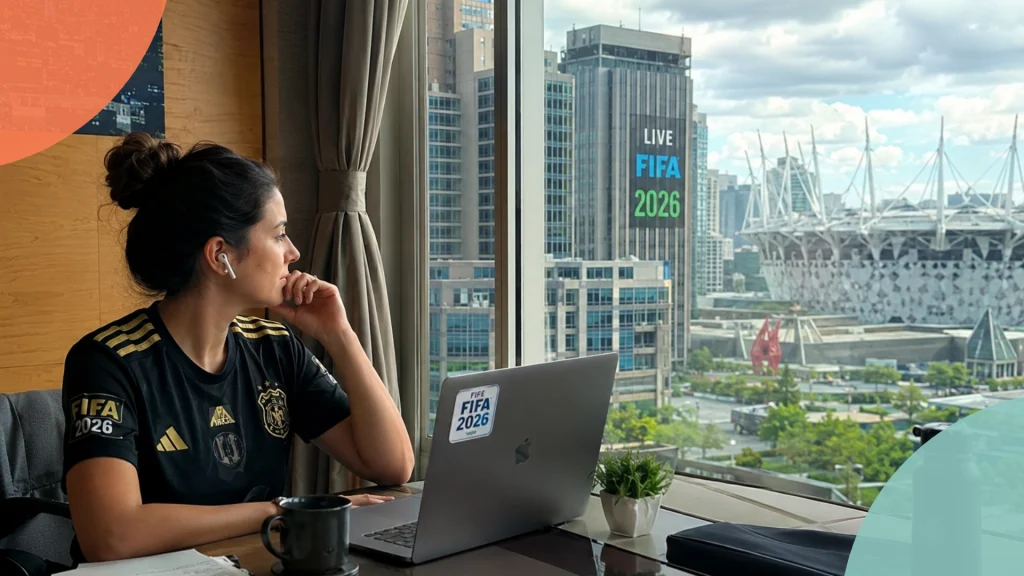
La sfida del lavoro da remoto ai Mondiali FIFA 2026
Lavorare da remoto durante un viaggio per i Mondiali di calcio crea uno specifico problema di connettività. Nei giorni delle partite, si è fuori dall'ufficio: ci si sposta in città, si fa la fila agli stadi e si assiste alle partite. Negli altri giorni, invece, è necessaria una connessione affidabile e veloce per le videochiamate, la condivisione di file e il lavoro concentrato.
Nei tre paesi ospitanti, la tua connessione dati mobile deve funzionare in due modalità diverse: navigazione e comunicazione leggere nei giorni delle partite e utilizzo più intenso nei giorni lavorativi, quando ne hai bisogno per attività professionali. E a differenza di un normale turista, non puoi semplicemente disconnetterti quando il segnale è debole.
Di cosa hanno bisogno i lavoratori da remoto da un piano dati
I requisiti per lavorare da remoto ai Mondiali FIFA 2026 sono più stringenti rispetto a quelli richiesti a un normale turista:
• Elevato volume di dati: videochiamate, accesso ai file nel cloud e utilizzo lavorativo generale si sommano. Un lavoratore da remoto può facilmente consumare 5-8 GB al giorno, oltre al normale utilizzo nei giorni delle partite. Per un viaggio di più settimane è consigliabile un piano con almeno 30-50 GB.
• Velocità costanti: la velocità dei dati limitata o ridotta dopo un certo limite giornaliero rende le videochiamate instabili e il download di file di grandi dimensioni impraticabile. Hai bisogno di un piano che offra prestazioni costanti, non solo velocità elevate per il primo GB al giorno.
• Copertura in più paesi: se il tuo viaggio attraversa più di un paese ospitante, il tuo piano dati deve funzionare senza problemi in ognuno di essi. Le interruzioni dovute al roaming durante una videochiamata non sono ammesse.
• Funzione hotspot mobile: nei giorni in cui la connessione Wi-Fi del tuo alloggio è debole, la possibilità di utilizzare il telefono come hotspot è fondamentale. Verifica che il tuo piano tariffario supporti il tethering prima di partire.
Perché la eSIM BNESIM è il miglior piano dati per i nomadi digitali ai FIFA 2026
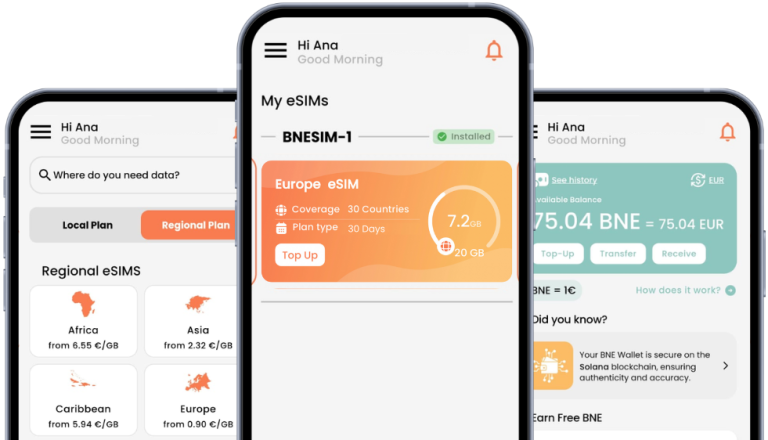
IL BNESIM eSIM regionale per il Nord America Copre Stati Uniti, Canada e Messico con un unico piano, il che lo rende la scelta ideale per i lavoratori da remoto che, in occasione dei Mondiali FIFA 2026, si spostano in diversi Paesi. Ecco perché è particolarmente adatto a chi viaggia per lavoro:
• Nessuna interruzione alle frontiere: quando attraversi il confine tra Messico e Stati Uniti o tra Stati Uniti e Canada, la eSIM BNESIM cambia rete automaticamente. La tua videochiamata non si interrompe, la tua VPN rimane connessa e il tuo lavoro continua senza interruzioni.
• eSIM per i lavoratori da remoto negli Stati Uniti e in tutti e tre i paesi ospitanti: il piano BNESIM offre un'unica attivazione che copre ogni città del tuo itinerario, che tu stia lavorando da un bar a Città del Messico o da uno spazio di coworking a Toronto.
• Supporto hotspot/tethering: utilizza la tua eSIM BNESIM come hotspot mobile quando il Wi-Fi dell'hotel non è sufficiente. Il tuo laptop si connette tramite la connessione BNESIM del tuo telefono.
• Configura tutto prima di partire: attiva l'eSIM a casa, testala e sarà operativa dal primo giorno in Nord America. Niente più tempo perso a cercare negozi di telefonia all'arrivo.
Lavorare dalle città ospitanti dei Mondiali FIFA 2026: una guida rapida
Ecco una panoramica del panorama del coworking e del lavoro da remoto nelle principali città ospitanti:
| Città | Scenario del coworking | cultura del caffè | Fuso orario (UTC) |
|---|---|---|---|
| New York | Eccellente | Eccellente | UTC−4 (EDT) |
| Los Angeles | Forte | Forte | UTC−7 (PDT) |
| Miami | Crescente | Bene | UTC−4 (EDT) |
| Toronto | Eccellente | Eccellente | UTC−4 (EDT) |
| Vancouver | Forte | Forte | UTC−7 (PDT) |
| città del Messico | Crescita rapida | Bene | UTC−6 (CST) |
| Guadalajara | Moderare | Bene | UTC−6 (CST) |
New York, Toronto e Los Angeles vantano le infrastrutture di coworking più solide, con centinaia di opzioni in ciascuna città a prezzi diversi. Anche a Città del Messico il panorama del coworking è cresciuto significativamente negli ultimi anni, con una concentrazione particolarmente forte nei quartieri di Condesa e Roma Norte.
Guadalajara e Monterrey sono meno sviluppate, ma offrono opzioni funzionali nei loro quartieri centrali degli affari.
Consigli pratici per lavorare da remoto durante il torneo
I fusi orari sono più importanti di quanto si pensi.
Il Nord America si estende su diversi fusi orari e spostarsi tra le città ospitanti può comportare una variazione degli orari di lavoro rispetto alla propria squadra o ai propri clienti. New York e Toronto si trovano nel fuso orario UTC-4, mentre Los Angeles e Vancouver in quello UTC-7, con una differenza di 3 ore durante il torneo stesso. Città del Messico si trova nel fuso orario UTC-6.
Pianifica le chiamate con i clienti e le scadenze in base al fuso orario della città in cui ti trovi attualmente, non del tuo paese d'origine.
Struttura tra giorno di partita e giorno lavorativo
L'approccio più sostenibile per i nomadi digitali che viaggiano durante i Mondiali del 2026 è quello di trattare in modo diverso i giorni delle partite e i giorni lavorativi. Nei giorni delle partite, dedicatevi al lavoro leggero al mattino (email, attività asincrone, pianificazione) e terminate entro il primo pomeriggio. Nei giorni lavorativi tra una partita e l'altra, lavorate a tempo pieno e godetevi la città la sera. Cercare di svolgere un lavoro pesante nei giorni delle partite porta a stress su entrambi i fronti.
Pass giornalieri per il coworking
Se rimani in ogni città solo per 3-5 giorni, un pass giornaliero per uno spazio di coworking è più pratico di un abbonamento mensile. La maggior parte delle principali catene di coworking (WeWork, Regus, IWG e le loro controparti locali) offre tariffe giornaliere. Prenota in anticipo per le sedi più ambite: gli spazi più richiesti vicino alle sedi dei tornei FIFA potrebbero esaurirsi rapidamente.
Alternative affidabili ai bar
In tutti e tre i paesi ospitanti, i caffè con una connessione Wi-Fi stabile e prese di corrente sono numerosi nei centri città. Negli Stati Uniti, Starbucks e le caffetterie specializzate indipendenti sono una garanzia. In Canada, Tim Hortons e le caffetterie specializzate sono ovunque. In Messico, Starbucks offre una connessione Wi-Fi costante e le caffetterie specializzate locali (in particolare nei quartieri Roma e Condesa di Città del Messico) sono ambienti di lavoro eccellenti.
VPN e sicurezza
Utilizzare reti Wi-Fi pubbliche in bar e spazi di coworking in qualsiasi Paese comporta rischi per la sicurezza. Si consiglia vivamente l'utilizzo di una VPN per qualsiasi attività professionale svolta su reti condivise. Configurate la vostra VPN prima di partire e verificate che funzioni correttamente con la vostra connessione eSIM BNESIM.
In sintesi, il punto cruciale per i lavoratori da remoto
I Mondiali di calcio FIFA 2026 rappresentano un'opportunità rara: un grande evento sportivo che si svolge in tre paesi, con un'infrastruttura in grado di supportare efficacemente il lavoro da remoto in ogni città ospitante. La combinazione di una solida rete di coworking, caffè affidabili e ottime reti mobili rende il lavoro durante i Mondiali una possibilità concreta.
Ciò che unisce il tutto sono i tuoi dati mobili. BNESIM eSIM regionale per il Nord America è il miglior piano dati per i nomadi digitali che si recano ai Mondiali FIFA 2026: copertura costante in tutti e tre i paesi ospitanti, piani ad alto volume, supporto hotspot e nessuna sorpresa giornaliera sul roaming. Attivalo prima di partire e il tuo ufficio viaggerà con te.
Lavora ovunque ti trovi con FIFA 2026. Inizia dai tuoi dati.




 Italiano
  English