

Traveling in China is incredible, but it can also get overwhelming when your favorite apps don’t work, or payment methods fail. That’s where having the best apps for China travel makes all the difference.
From paying via WeChat or Alipay with a foreign credit card, to navigating metros and finding hidden local food spots, this guide covers what you really need in 2025. We’ll walk you through must-have apps for payments, accurate maps, transport, and discovering local gems.
What Are the Must-Have Apps to Travel in China?

Here’s a quick overview of essential apps every traveler should download before or during their trip:
- • WeChat (微信): Messaging, payments, mini-apps, and more.
- • Alipay (支付宝): Another must for cashless payments.
- • Amap (高德地图): Excellent navigation app with live traffic updates.
- • Baidu Maps (百度地图): Popular with locals for public transport routes.
- • Didi (滴滴出行): The go-to ride-hailing app.
- • 12306 & Trip.com : Best for train booking.
- • Xiaohongshu or RedNote (小红书): Social app to discover local spots, reviews, and hidden gems.
How Do Foreigners Pay in China with Apps?
Cash is rarely used in China, and most places don’t accept foreign cards. Thankfully, WeChat Pay and Alipay now allow international visitors to link their apps to Visa, Mastercard, and select foreign cards. That means fewer “only Chinese cards accepted” moments. But in smaller towns/rural areas, you’ll still need cash or backup phone wallet.
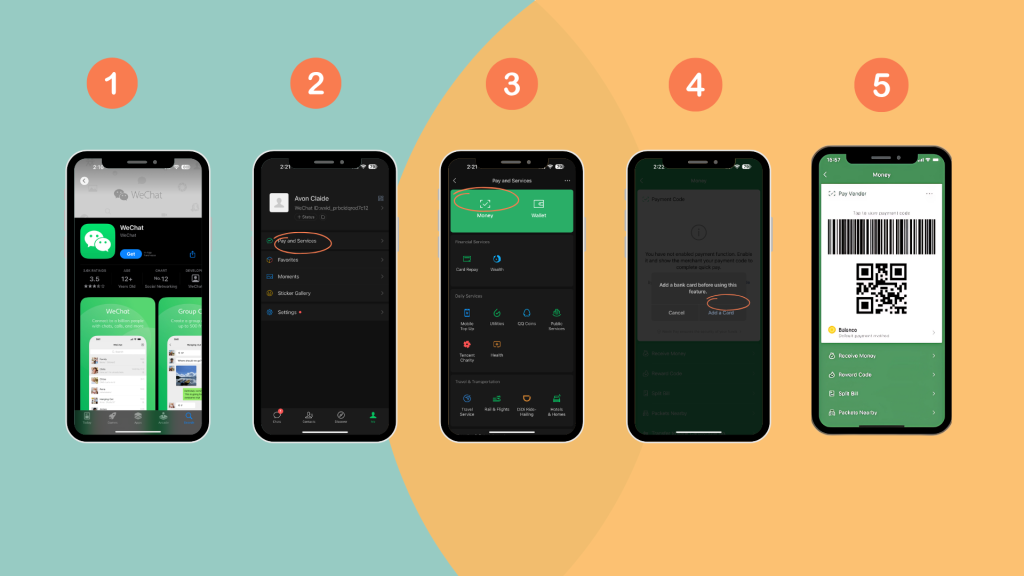
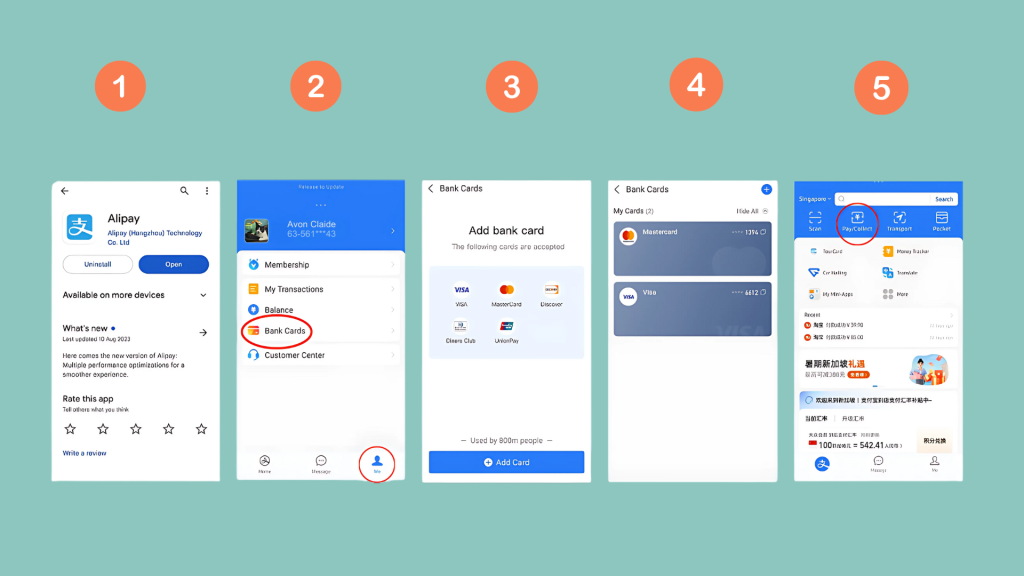
Steps to set up WeChat Pay or Alipay
- Download the app and sign up with your passport details.
- Add your international credit or debit card.
- Verify your identity with a photo of your passport.
- Start paying anywhere with QR codes.
This setup makes traveling in China far more convenient, as you can shop, dine, and even buy street food with just your phone.
Which Map App Works Best? Amap or Baidu Maps?
China uses specific coordinate systems (GCJ-02 etc.), meaning standard GPS / Google Maps is less precise. So:
- • Amap tends to be more user-friendly for foreigners with more English UI and useful POIs (restaurants, shops).
• Baidu Maps is heavier in Chinese but often more detailed for transit, railway, and rural bus data.
Tip: If you’re traveling between big cities (Shanghai, Beijing, Guangzhou), install both. Use Amap for walking + restaurant discovery, Baidu for train station navigation where signs might only be Chinese.
What’s the Easiest Way to Book Trains in China?
• 12306 is the official app but requires Chinese ID for full access. Foreigners can still book, but the process may be tricky.
• Trip.com simplifies everything with English support, international payment options, and easier booking.
Many foreign travelers report using Trip.com when they don’t want to navigate Chinese passport + upload ID issues on 12306. But for major routes (like Beijing to Xi’an or Shanghai to Hangzhou), 12306 offers more train options.
How Do I Get Around Cities?
• Didi Chuxing is China’s Uber equivalent.
• The app offers an English version and supports international payments.
• Safer and more convenient than flagging down a taxi.
How Can I Share and Discover Local Spots (Beyond Instagram)?
Instagram is blocked in China, but locals and expats use Xiaohongshu (Little Red Book / RedNote).
• Combines lifestyle tips, travel reviews, restaurant guides, and shopping recommendations.
• Perfect for finding trendy cafés, hidden attractions, and authentic experiences.
Easiest Way to Stay Online in China
Does eSIM work in China?
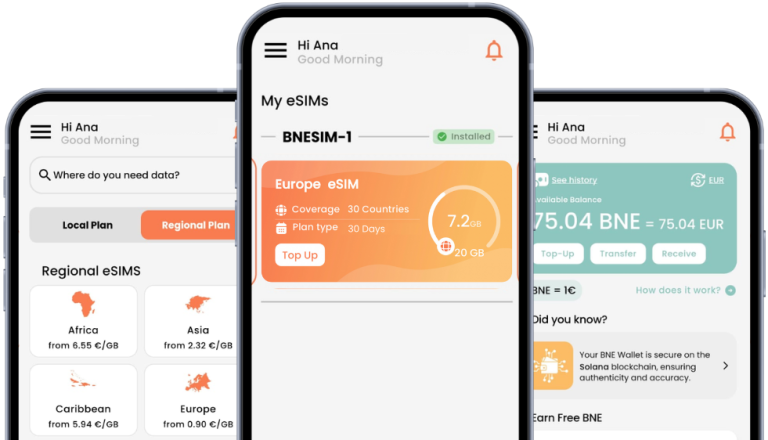
Absolutely! Staying connected in China is easier than ever with an international eSIM. Instead of hunting down a local SIM card, you can activate BNESIM eSIM in just a few taps and enjoy instant, reliable data as soon as you land. It’s not only convenient but also one of the most cost-effective ways to stay online while exploring China.
Benefits of using a BNESIM eSIM in China
• Instant setup before you land.
• No KYC process required
• Affordable data packages with 5G high-speed internet.
• Works on major network (Chine Mobile).
FAQs
Can I buy eSIM in China?
Yes, but buying before you arrive (via BNESIM) is much easier.
Do I need a VPN to use apps in China?
For blocked western apps (like Instagram, Google), yes. Many travelers use VPNs; however always check legality and safety.
Which social media apps work in China?
WeChat, Xiaohongshu (RedNote), Meituan/Dianping; western apps are often restricted without VPN.
Is WhatsApp blocked in China?
Yes, WhatsApp often faces restriction; alternative messaging via WeChat is much more reliable.

Kai Claide
A content creator with a love for the outdoors and pictures. A true beach person at heart, enjoys sunny coastlines, sipping matcha, and making the most out of every adventure. Curious and is always up for something fun.




 English
  Italiano