
FIFA World Cup 2026 is finally here. Forty-eight teams, 16 host cities, and three countries — the United States, Canada, and Mexico — are hosting the biggest sporting event on the planet. If you’ve made the trip, you’re in the right place.
This is the complete connectivity guide for FIFA 2026 travelers: everything you need to know about getting online, staying connected, and making sure your phone is ready for every moment of the tournament — from navigating to your first stadium to sharing the final whistle.
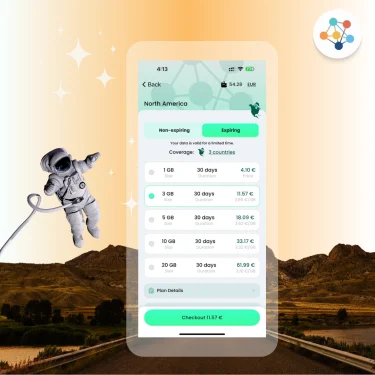
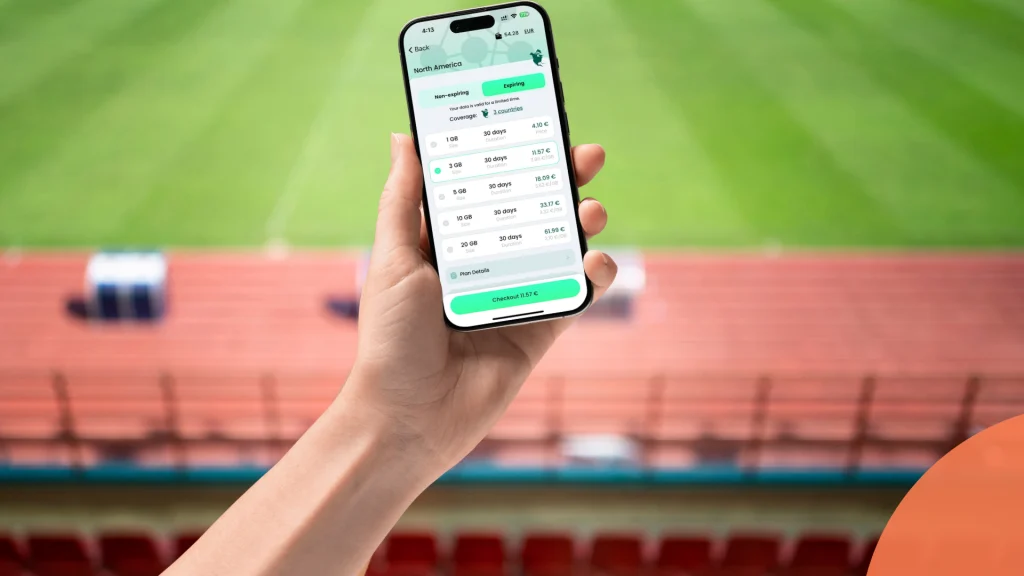
If you haven’t sorted your mobile data yet, BNESIM has a FIFA 2026 offer covering all three host countries on a single eSIM plan.
The FIFA 2026 Connectivity Challenge
Most international football tournaments are held in one country. Connectivity planning is simple: sort a local SIM or roaming plan, and you’re covered.
FIFA 2026 is different. Three host countries means three separate mobile network environments, three potential sets of roaming fees, and the real possibility of crossing international borders mid-tournament as your team advances. For any traveler attending more than one match — or visiting more than one host country — connectivity requires a bit more thought.
The good news is that all 16 host cities have strong 4G LTE and growing 5G infrastructure. Network quality is excellent everywhere. The challenge isn’t availability — it’s choosing the right approach before you arrive.
What Kind of FIFA 2026 Traveler Are You?
The Single-Match Visitor
You’ve got one match, maybe two, in a single host country. You’ll be in one city for a few days. Your connectivity needs are similar to any short international trip: reliable data for maps, messaging, and ticket access. A carrier travel pass might just about cover this, though the BNESIM eSIM for tourists in FIFA 2026 is still the better-value option even for short visits.
The Multi-City Fan
You’re following your team — or following the tournament — through multiple rounds. Group stage in Mexico, knockout rounds in the USA, perhaps a trip to Toronto. You’ll cross at least one international border, and possibly several. This is where multi-country mobile data for FIFA 2026 travelers in North America becomes essential. A single-country plan will leave you exposed.
The Long-Stay Visitor
You’re here for the long haul — weeks rather than days, multiple cities, and the full tournament experience. Your data needs are high: constant navigation, heavy messaging, regular social media, possibly working remotely on the side. You need a plan with a generous data allowance and no daily cap surprises.
Whatever your travel profile, the BNESIM North America Regional eSIM covers all three. One activation, one plan, coverage across every host city from the opening match to the final.
Your Mobile Data Options: A Quick Comparison
Roam on your home SIM
The simplest setup, but typically the most expensive for a multi-week trip. Your carrier charges per country, and daily travel passes add up quickly. Most useful for very short single-country visits where convenience outweighs cost.
Local SIM card per country
Good value within a single country, but requires buying separate SIM cards for each host nation — three in total if your trip crosses all three borders. Involves phone shop visits in each country and managing multiple SIM swaps.
BNESIM North America Regional eSIM
An eSIM is a digital SIM activated via QR code before you travel. BNESIM’s North America Regional plan covers the USA, Canada, and Mexico on one plan — no physical card, no border disruption, no daily roaming fees. For the connectivity guide for FIFA 2026 travelers, this is the recommendation across all three traveler profiles.
Getting Set Up with the BNESIM eSIM
Setup takes about five minutes and can be done at home before you travel:
• Confirm your phone is eSIM compatible (iPhone XS+, Samsung Galaxy S20+, Google Pixel 3+) and unlocked by your home carrier.
• Visit BNESIM, select the North America Regional plan, and complete your purchase.
• Scan the QR code in your phone’s Settings > Mobile/Cellular > Add eSIM.
• Set BNESIM as your active data line. Keep your home SIM active for calls and texts.
• Test your connection at home. You’re ready.
Essential Connectivity Tips for the Tournament
Before each match day
Download offline maps for the stadium area and your route from accommodation before you leave. Network speeds at major stadiums drop significantly on match days as tens of thousands of devices compete for bandwidth. Having maps loaded offline means navigation works even in poor signal conditions.
At the stadium
Most FIFA 2026 venues will offer stadium Wi-Fi, but capacity is limited and speeds during peak times can be slow. For anything time-sensitive — checking your ticket, finding your seat, meeting your group — rely on your mobile data rather than venue Wi-Fi. Check your BNESIM eSIM is set as the active data line before you enter.
Moving between host cities
When you cross from one host country into another, the BNESIM eSIM switches to the local network automatically. There’s nothing to do on your end. Your data continues on the same plan without interruption.
Managing your data allowance
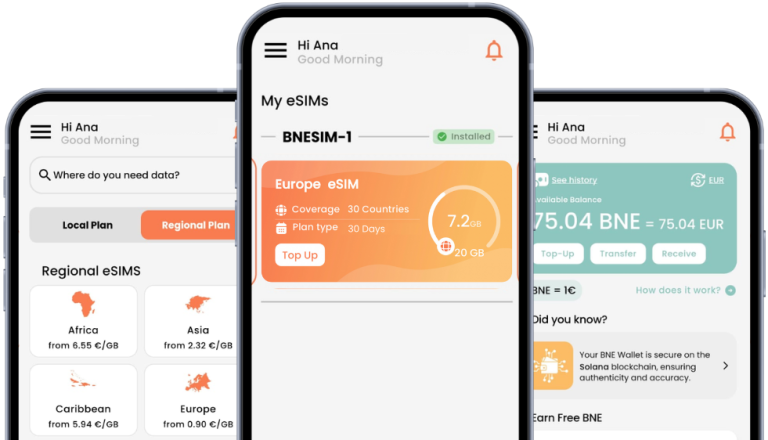
Even a generous data plan benefits from a few habits. Turn off background app refresh in your phone’s settings. Download any content you want to watch on hotel Wi-Fi rather than mobile data. Use WhatsApp or iMessage over Wi-Fi where available. The BNESIM app shows your real-time data usage so you can track where you stand throughout the trip.
Your Pre-Tournament Connectivity Checklist
Use this before you travel:
• Phone confirmed as eSIM compatible ✓
• Phone unlocked by home carrier ✓
• BNESIM North America Regional eSIM purchased and installed ✓
• BNESIM set as active data line — connection tested at home ✓
• Offline maps downloaded for first host city ✓
• FIFA app updated and match tickets pre-loaded ✓
• Emergency contacts saved offline ✓
• Bank notified of travel to USA/Canada/Mexico ✓
You’re Ready
FIFA 2026 is a once-in-a-generation event. The logistics are complex, the scale is enormous, and the moments are going to be extraordinary. Don’t let a connectivity gap be the thing that gets in the way.
The BNESIM North America Regional eSIM handles the data. You handle the football.
Sort your connectivity before the first whistle.


 English
  Italiano