
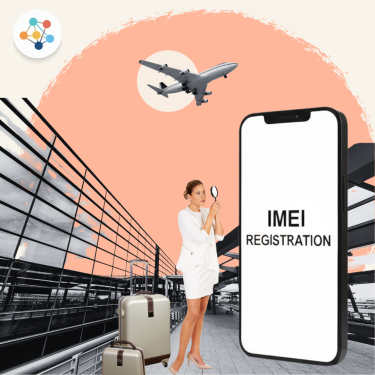
If you plan on traveling abroad, one important detail often overlooked is IMEI registration. The International Mobile Equipment Identity (IMEI) is a unique number assigned to every mobile device. Many governments use it as a tool to fight phone theft, counterfeit devices, and network fraud.
But here’s the catch: in some destinations, you may need to register your device before you can use local networks. Failing to do so could mean losing access to calls, texts, and mobile data. Let’s break down IMEI registration by country and what it means for travelers.
Why IMEI Registration Matters?

IMEI registration ensures that only authorized, traceable devices connect to local mobile networks. Some countries enforce mandatory registration at customs, while others operate on an “allowlist” (or whitelist) system, where only pre-approved devices can connect.
For travelers, this can mean:
• Network access limitations if your device isn’t registered.
• Additional costs, as registration sometimes comes with fees.
• Legal compliance, since ignoring the rules could lead to fines or even device blocking.
Countries Requiring Mandatory IMEI Registration
Here are some of the key destinations where travelers need to be aware of IMEI rules. For a complete list and details on mandatory registration, click here.
Turkey
The device’s calling features will be blocked after 120 days of use with a Turkish SIM card if not registered. Registration is done via the e-Devlet portal (or through a mobile operator for a fee) and requires paying a substantial, non-refundable registration fee/tax. This can only be done once every three years per passport.
Indonesia
Devices brought from abroad can be used on local networks for up to 90 days without registration. For longer stays, you must declare the device and register its IMEI with Customs (Bea Cukai) upon arrival (best done at the airport). This process involves paying import tax/duty if the device’s value exceeds a certain limit (e.g., USD $500).
India
The system primarily affects manufacturers and importers (ICDR). For a traveler bringing in a personal device, the key is to ensure it is not blacklisted. Specific, active registration of a personal phone is not generally required for short-term visitors, but the phone must be legal.
Pakistan
Foreign nationals can use the Temporary Mobile Registration System to use their personal mobile phones for up to 120 days without duties and taxes. For longer stays or regularized use, registration is required through the DIRBS (Device Identification Registration and Blocking System), which can involve customs duty/taxes based on the phone’s value.
Thailand
When purchasing a local SIM (including tourist SIMs), the vendor at the airport or shop will register it to your passport. No separate IMEI registration process is typically required for tourists as the device is linked to the registered SIM.
Ecuador
If your specific phone model is not in the approved database, local network operators may send a warning and eventually block the device. While this rule primarily targets imports, travelers staying longer than a short holiday may face issues. Mandatory registration is handled by ARCOTEL, the national telecom authority. Non-compliance may delay activation.
Uzbekistan
Registration is done through the UZIMEI system (online at uzimei.uz, via USSD, or at payment centers). The phone must also be declared to customs upon arrival to be eligible for registration without a significant duty payment. Unregistered devices are eventually blocked from local networks.
Countries with Allowlist (Whitelist) Systems
Instead of universal registration, some nations use a centralized system where only “approved” devices (those with an IMEI listed in the database) are allowed to connect to local mobile networks. This system ensures only legally imported and registered devices can operate.
Chile
Chile requires IMEI registration with the telecom authority (SUBTEL) if you plan to use a local SIM card.
Grace Period: 30 days from the first use with a local SIM.
Action: Register the IMEI online through authorized companies. One personal device registration is usually free per year.
Consequence: The phone will be permanently blocked from all Chilean networks after the deadline.
Azerbaijan
Azerbaijan uses a strict national whitelist for all mobile devices connecting to its networks.
Grace Period: 30 days from the date your device first connects to any local network (even on international roaming).
Action: Register the IMEI online via the state system and pay a mandatory registration fee.
Consequence: The cellular function will be blocked permanently after 30 days.
Nepal
Nepal utilizes an MDMS system primarily to prevent the illegal entry of new mobile phones.
Who is Affected: Tourists bringing in their existing personal device are often fine, but anyone bringing a new, unregistered phone must register it.
Action: New devices must be registered via the NTA (Nepal Telecommunications Authority) MDMS portal.
Consequence: An unregistered phone will be unable to use a local Nepali SIM card.
General Advice for Travelers
If you are heading to a country with mandatory IMEI regulations, proactive preparation is essential to avoid service interruption.
Act Immediately Upon Arrival
The grace period (e.g., 30, 90, or 120 days) starts the moment your phone connects to a local network. Prioritize registration at the airport/border to claim any tax exemptions.
Register ALL IMEIs
Dual-SIM/eSIM phones have two IMEIs. You must typically register both to ensure your phone functions correctly.
Prepare Key Documents
Have your Passport, IMEI number, Proof of Purchase/Invoice (for customs valuation), and Boarding Pass/Entry Stamp ready for the process.
Budget for Taxes
High-value phones exceeding the duty-free limit (often USD 500) will incur significant import taxes/fees (e.g., 30-40% of the excess value).
Consider Alternatives for Short Trips
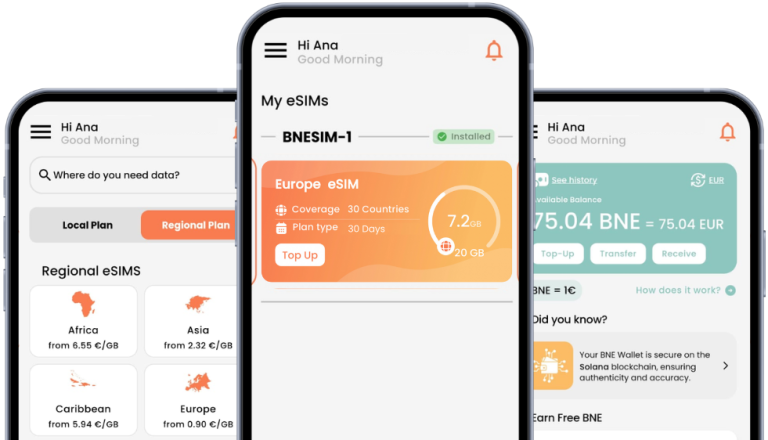
For brief visits, using international roaming or a global travel eSIM such as BNESIM often bypasses the local IMEI registration requirement entirely.
Security Note
Be cautious about mandatory government tracking. For sensitive travel, consider using a separate, “burner” device.
Final Thoughts
IMEI registration by country is becoming increasingly common as governments aim to combat theft, fraud, and the spread of counterfeit devices. For travelers, understanding these rules is essential to avoid unexpected disruptions in connectivity.
Before you take off, double-check your destination’s IMEI policies so you can stay connected without any issues. If you’re unsure of your device’s status, services like IMEI checkers can help you verify compliance in advance.
One smart way to simplify your trip is by using an eSIM instead of relying on physical SIM cards. With BNESIM’s eSIM, you can enjoy instant activation, seamless connectivity in over 200 countries, and the freedom to switch between networks without worrying about SIM swaps or complicated registrations.

Kai Claide
A content creator with a love for the outdoors and pictures. A true beach person at heart, enjoys sunny coastlines, sipping matcha, and making the most out of every adventure. Curious and is always up for something fun.



 English
  Italiano