

FIFA 2026 is unlike any previous World Cup. With 48 teams, 16 host cities spread across three countries, and a tournament format that runs for six weeks, multi-city travel is part of the event in a way it’s never been before. Fans who want to follow their team through the group stage, round of 16, quarter-finals, and beyond could find themselves moving between the USA, Canada, and Mexico multiple times.
For anyone planning that kind of trip, mobile data isn’t just a convenience — it’s the thread that holds the logistics together. And the way you handle it will define how smoothly the whole experience goes.
The Multi-City Connectivity Problem
At a typical World Cup hosted by a single country, getting mobile data is straightforward: buy one local SIM or activate one roaming plan, and you’re covered for the whole tournament. FIFA 2026 changes that equation entirely.
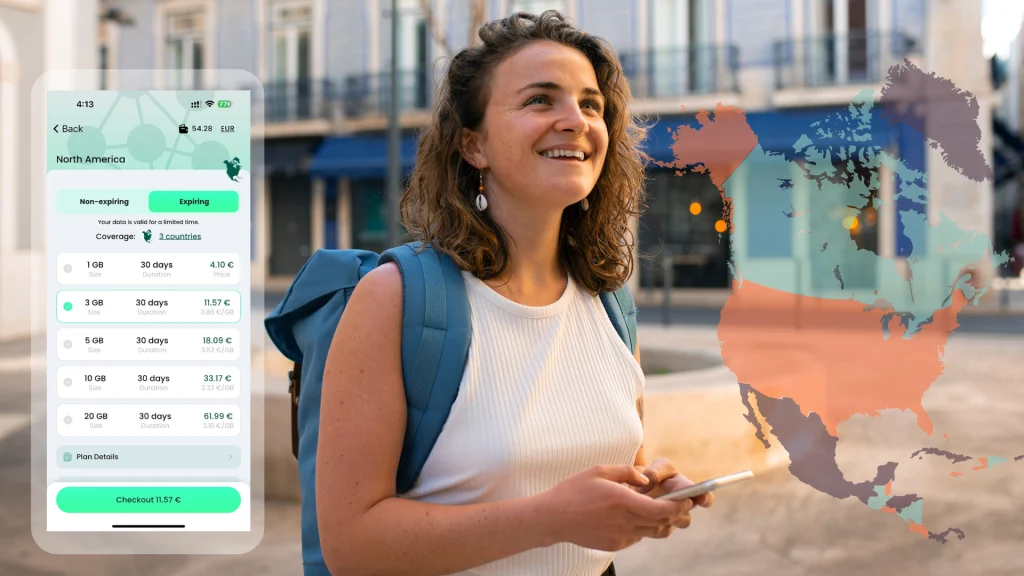
Three host countries means three separate mobile network environments. The USA runs on AT&T, T-Mobile, and Verizon. Canada on Bell, Rogers, and Telus. Mexico on Telcel and AT&T Mexico. A data plan that works in one country doesn’t automatically work in another — at least not without roaming charges or a SIM swap.
For multi-city travelers, the standard solutions break down quickly:
• Home carrier roaming: Works everywhere, but charges apply per country and accumulate over a long trip. Crossing from Mexico into the USA or from the USA into Canada can trigger a new daily rate.
• Local SIM card per country: Good value within a single country, but requires buying and activating three separate SIM cards — one for each host nation — and swapping them each time you cross a border.
• Carrier travel add-ons: Usually cover one country at a fixed daily rate. Multi-country coverage requires separate add-ons, and the costs stack up over several weeks.
How the BNESIM eSIM Solves the Multi-City Problem
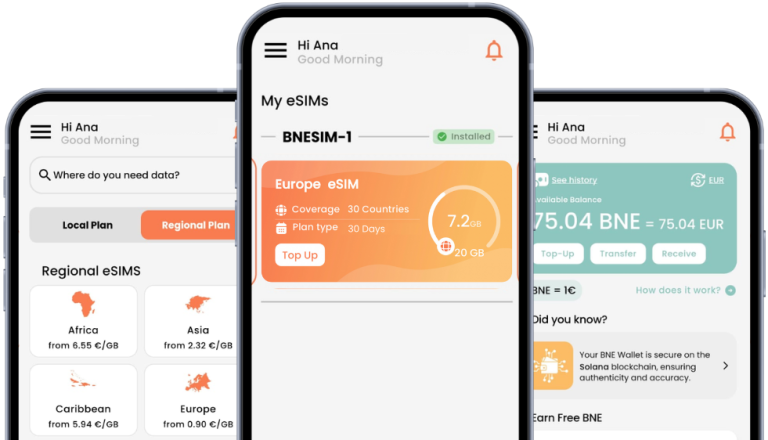
The BNESIM North America Regional eSIM is a single eSIM USA Canada Mexico plan that covers all three host countries under one activation. You set it up at home before you travel, and it works from your first arrival to your final departure — regardless of how many borders you cross in between.
There’s no SIM card to swap at the Mexican border. No new plan to activate when you fly into Toronto. No daily charge ticking up every time you cross into a different host country. Your data just works, on the same plan, in every city on your itinerary.
What a Multi-City Itinerary Looks Like on the BNESIM eSIM
Here’s a sample itinerary for a fan following their team through multiple rounds — and how the BNESIM eSIM covers every leg:
| Stage | Location | Country | Data coverage |
|---|---|---|---|
| Group stage | Guadalajara | Mexico | BNESIM — active |
| Round of 16 | Los Angeles | USA | BNESIM — same plan |
| Quarter-final | Dallas | USA | BNESIM — same plan |
| Semi-final | New York / NJ | USA | BNESIM — same plan |
| Final | New York / NJ | USA | BNESIM — same plan |
From Guadalajara to Los Angeles to New York, the BNESIM eSIM carries you through the entire tournament without interruption. The same plan that’s active in Mexico is still active when you land in the USA. You never need to think about it.
Practical Tips for Multi-City FIFA 2026 Travel
Connectivity is one piece of a multi-city trip. Here are a few other things that matter for travelers moving between host cities:
• Download offline maps for every city before you leave your current location. Stadium areas and transit hubs get congested on match days, and network speeds can drop. Having offline maps loaded means navigation works even in poor signal conditions.
• Book internal flights early. Demand for flights between US host cities will surge during the tournament, particularly between the group stage and knockout rounds. Prices increase significantly as match dates approach.
• Pack light. Moving between cities frequently means checking bags at airports, navigating transit systems, and walking more than you expect. A carry-on-sized bag changes the travel experience dramatically.
• Keep the FIFA app updated on Wi-Fi before each match day. The app requires connectivity to display digital tickets, and you don’t want to find out it needs an update while standing at the stadium gate.
• Screenshot your key information. Accommodation addresses, transport routes, and emergency contacts — saved offline in your photos — are available even when mobile data temporarily drops.
What About Multi-City Travelers Staying in Just One Country?
Not every multi-city FIFA 2026 trip will cross borders. Plenty of fans will watch matches across several US cities — say, Houston for the group stage, Dallas for the round of 16, and New York for the final — without leaving the United States.
For a US-only trip, the BNESIM North America Regional eSIM still provides seamless coverage across all 11 US host cities. And if your itinerary changes — if a last-minute match in Canada or Mexico becomes possible — you’re already covered. No plan changes, no new SIM, no extra cost within your data allowance.
The Bottom Line for Multi-City Travelers
If you’re attending FIFA 2026 matches across multiple host cities — whether within one country or across all three — the BNESIM North America Regional eSIM is the only multi-country data plan for a World Cup trip that covers the full picture. One eSIM, all three countries, every host city, from the group stage to the final.
Sort your eSIM before you book your first internal flight. It’s one less thing to think about when you’re focused on the football.
One eSIM for the whole multi-city trip.




 English
  Italiano